
The dry time detective.
Turn the dial to how long one load takes to dry, add your vent length, bends and cleaning history, and see how likely it is that air is not leaving your house.
- Turn the dial
- See the odds
- Free, no signup

How this works
- A normal load often dries in well under an hour. The longer yours takes, the more likely air is not leaving.
- Long runs, many bends and no recent cleaning all add to the odds.
- This is a quick screening, not a diagnosis. An airflow reading at the vent hood gives the real answer.
Saved. Your answers will travel with the quote form at the bottom of the page.
Four clues behind a slow dryer.
Minutes per load
Long cycles are the first clue that moist air is not leaving.
Vent length
Long runs hold air back and give lint more places to settle.
Number of bends
Every elbow slows the air and counts against the planning limit.
Last cleaning
Lint builds up over time, so the date matters as much as the symptoms.
Dry Time Detective questions
How do I know my dryer vent is clogged?
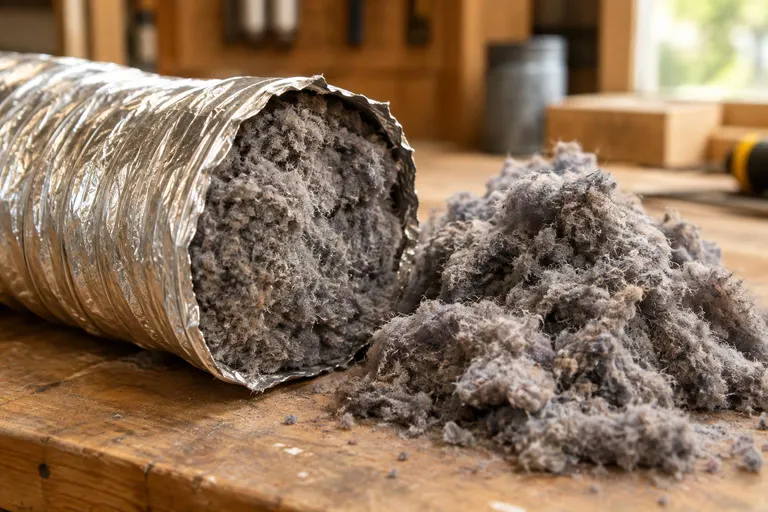
Clothes that are damp after a full cycle, a dryer that is hot to the touch, a hot or humid laundry room, a burning smell, lint around the vent hood and a flap that barely opens are the common signs.
Is it safe to keep using a dryer with a clogged vent?
If the vent is badly blocked or you smell burning, stop using the dryer and unplug it until the vent is cleared. A restricted vent holds heat in and makes the dryer work harder.
Can I clean my dryer vent myself?
You can clean the lint screen and the trap slot often, and a short, straight vent can be cleaned with a brush kit. Long, bent, roof and hidden runs, gas dryers and vents that have not been cleaned in years are better left to us.
Want a real reading?
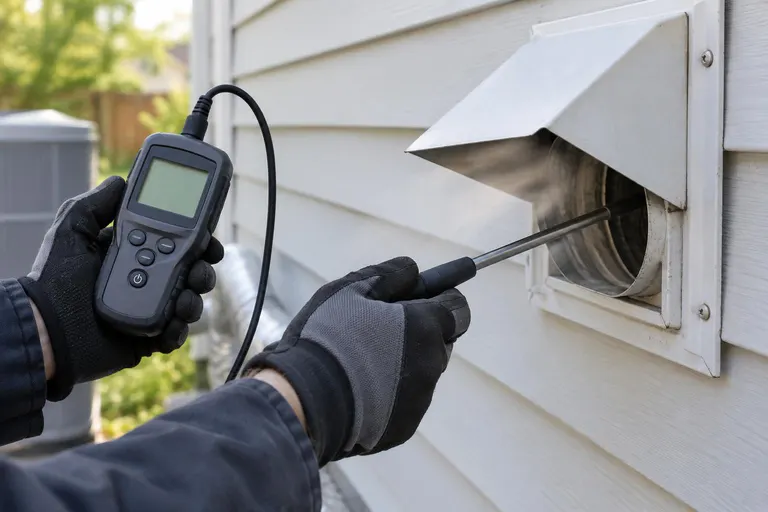
A technician can measure the airflow at the hood and clean the run.