
The vent run builder.
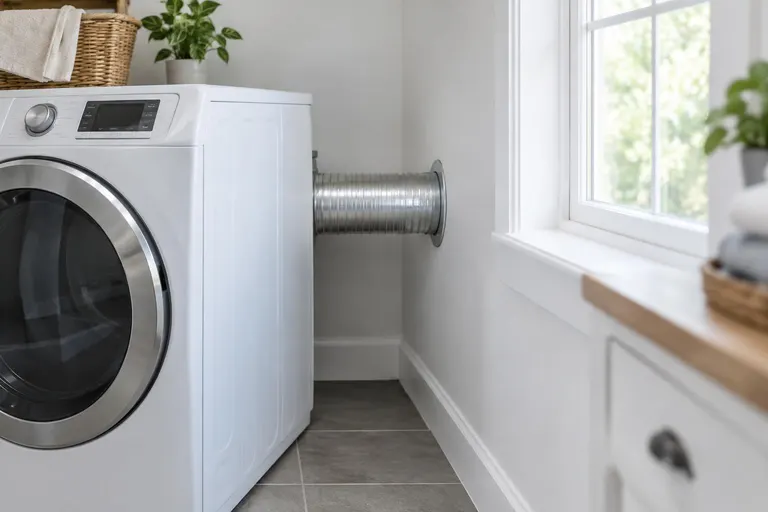
Draw your dryer vent from the back of the dryer to the outside, one straight piece or bend at a time, and see the effective length against the common planning figure.
- Build the route
- See the length
- Free, no signup
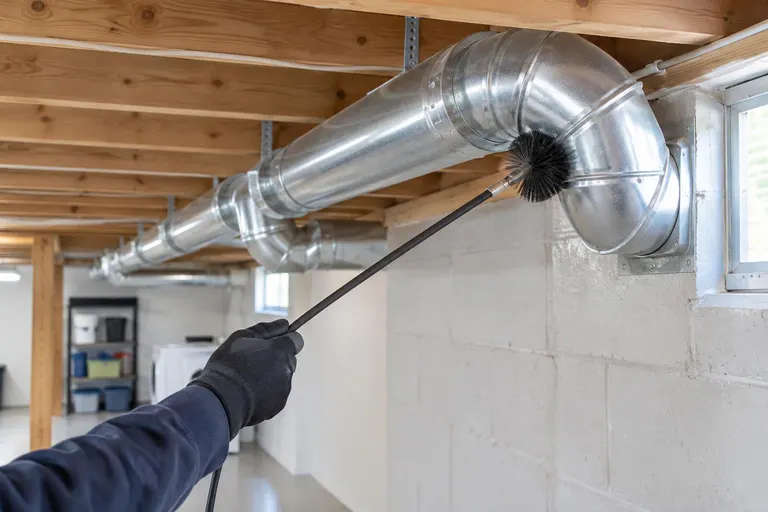
How this works
- A common code planning figure is about 35 feet of duct, reduced by about 5 feet for each 90-degree bend and about 2.5 feet for each 45-degree bend.
- Your dryer manual may set a different limit, and your local building department decides what applies to you.
- Shorter and straighter always moves air better.
Saved. Your answers will travel with the quote form at the bottom of the page.
Length and bends decide the airflow.
Straight duct
Every foot of duct adds a little resistance.
90-degree bends
A common planning allowance is about 5 feet each.
45-degree bends
A common planning allowance is about 2.5 feet each.
Your manual and your code
Both can set limits that differ from the planning figure.
Vent Run Builder questions
How long can a dryer vent be?
A common code planning figure is about 35 feet, reduced for each bend, but your dryer manual and local code decide. Our Vent Run Builder lets you draw your route and see the effective length.
How do I know my dryer vent is clogged?
Clothes that are damp after a full cycle, a dryer that is hot to the touch, a hot or humid laundry room, a burning smell, lint around the vent hood and a flap that barely opens are the common signs.
How long does a cleaning take?
Many standard jobs take about an hour. A long run, a roof exit, a heavy clog or a multifamily building takes longer. We tell you what to expect before we start.
Want a second opinion on your route?
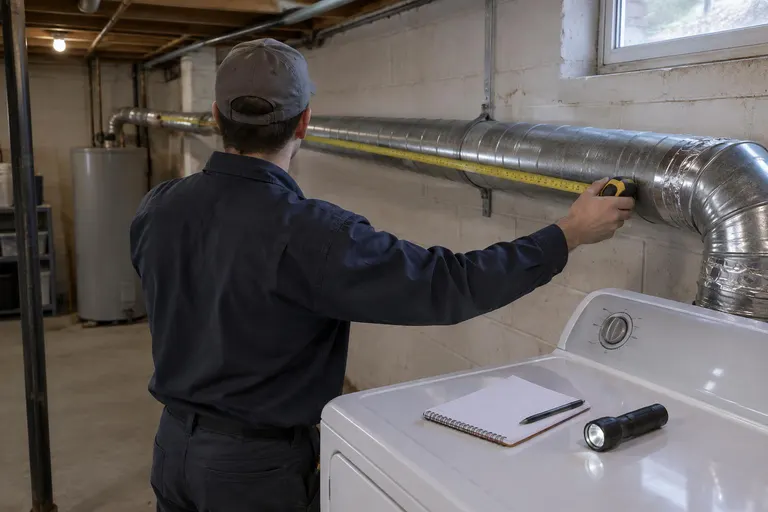
We can measure the run, test the airflow and suggest a shorter way.