
Tight closets, smart venting.
Stacked units sit in narrow closets with little room behind them. The right elbow, box and duct keep air moving without crushing the connection.
- Space: Closet and stack setups
- Parts: Low-profile elbows and boxes
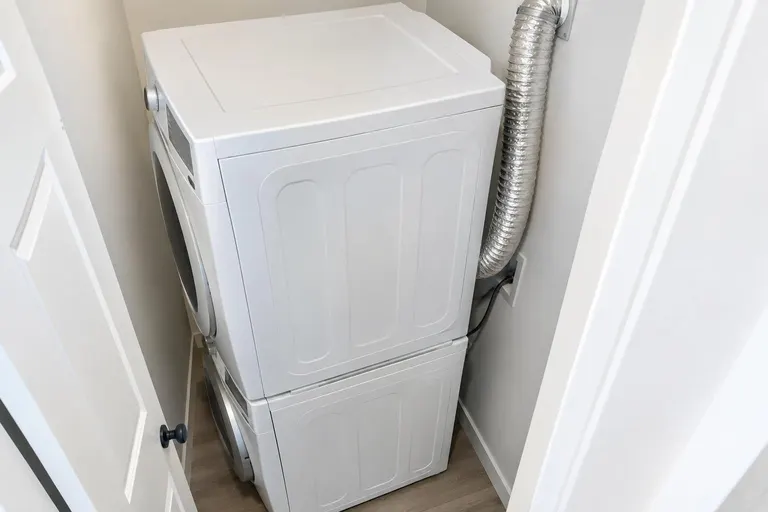
What it is, and why it matters.
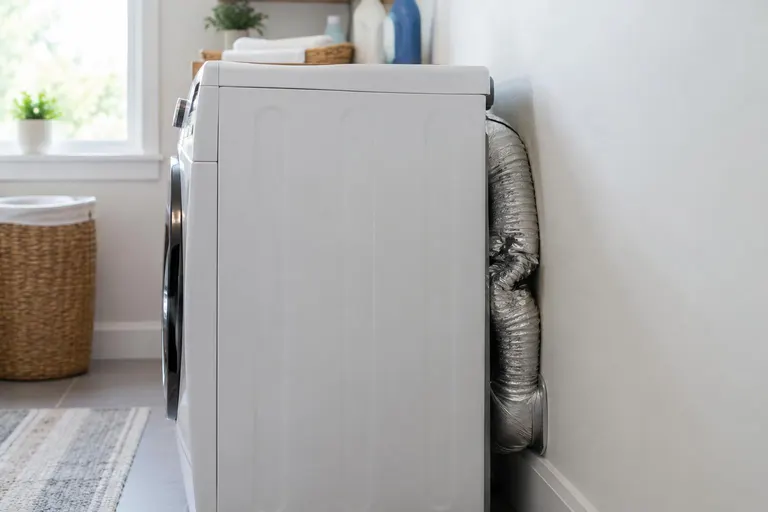
Closet laundry has the toughest venting: the dryer sits right against the wall and the duct has barely an inch to turn.
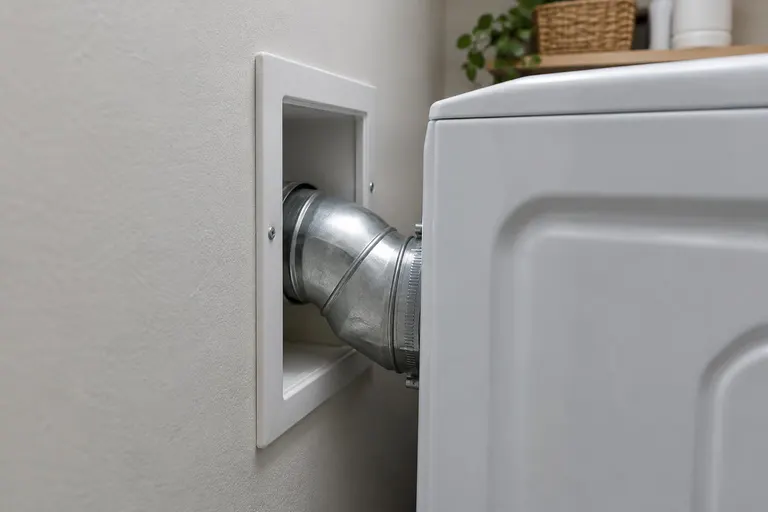
We use low-profile elbows, recessed boxes and short rigid runs so the stack fits and the duct stays open. We also check the service access so the unit can be moved later.
Four things done right.
Fits the tightest spaces
Low-profile parts keep the duct open.
Short and smooth
A short rigid run keeps airflow steady.
Room for service
We leave the unit movable.
Tested at the end
We confirm the airflow.
From first call to stackable washer-dryer venting.
- 1
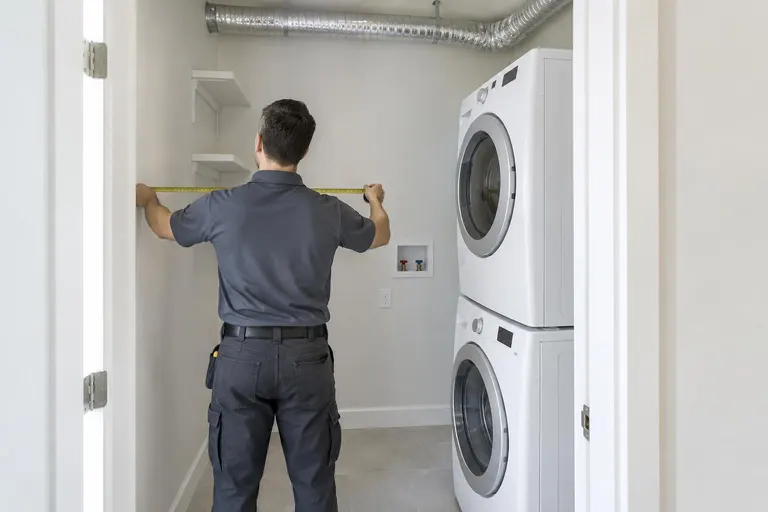
Measure the closet
We check the clearance behind the stack.
- 2
Choose the parts
Low-profile elbow or recessed box.
- 3
Install the duct
A short run is sealed and clamped.
- 4
Test
We run the dryer and check the airflow.
Stackable Washer-Dryer Venting in cities across the country.
We do this work for homes and businesses from coast to coast. Find your city to see the climate and homes we plan for.
Stackable Washer-Dryer Venting: common questions
Can a stacked dryer vent through the roof?
In some buildings, yes. The route depends on the building, so we check before suggesting it.
Why does my closet dryer take so long?
Crushed ducts and long runs are common in closets. An inspection finds the cause.
How do I get a quote for stackable washer-dryer venting?
Fill in the form or call or text 800-313-8481. A few details about the dryer and the vent, or a photo of the vent hood, usually give us what we need, and we send a written price.
Ready to talk about stackable washer-dryer venting?
A few details or a photo of the vent, and a written price.