
Pick the right duct.
Four questions about your space, route and building rank rigid, semi-rigid and flexible dryer duct and tell you what to watch for.
- Answer four questions
- See the ranking
- Free, no signup
Four quick questions
Answer the questions to see which duct fits best.
How this works
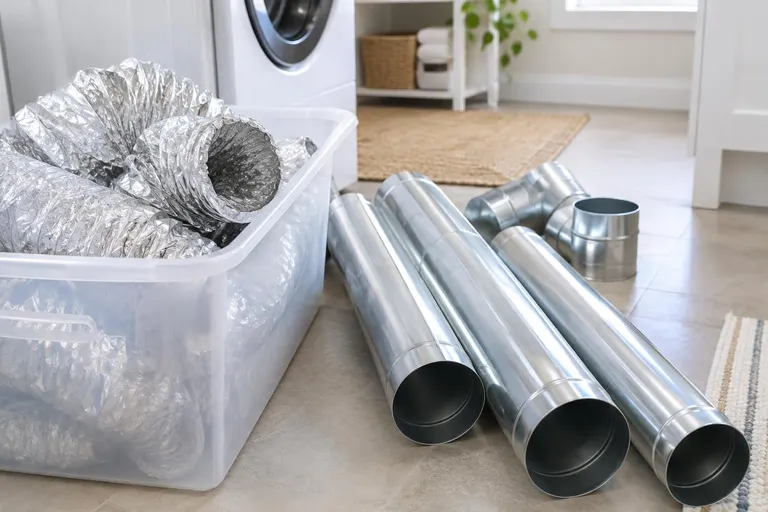
- Smooth, rigid metal duct moves air best and is the usual first choice for the main run.
- Semi-rigid metal bends into tight spots and works well for short connections.
- Thin foil and vinyl flexible duct crush easily and trap lint, and many codes limit them. Always follow your dryer manual and local code.
Saved. Your answers will travel with the quote form at the bottom of the page.
The duct behind your dryer matters more than you think.
Smooth walls
Lint catches on ridges, so smoother is better.
Strength
Thin duct crushes when the dryer is pushed back.
Fit
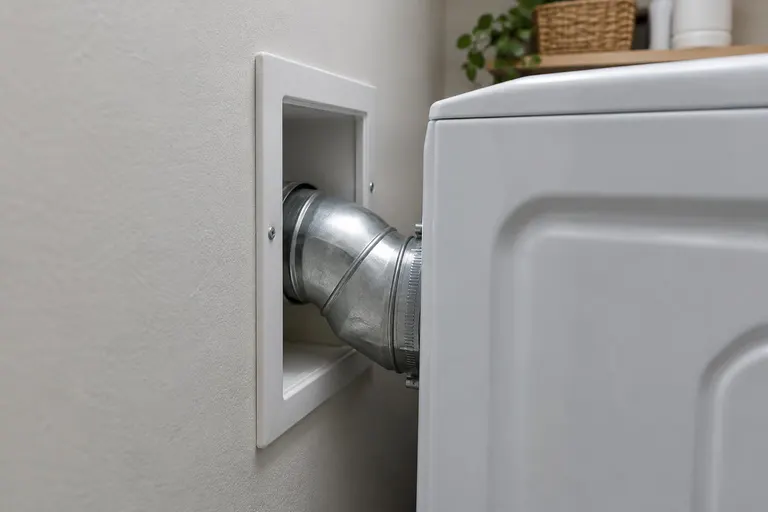
Tight spaces may need a semi-rigid connector.
Rules
Your dryer manual and local code decide what is allowed.
Duct Material Matcher questions
How long can a dryer vent be?
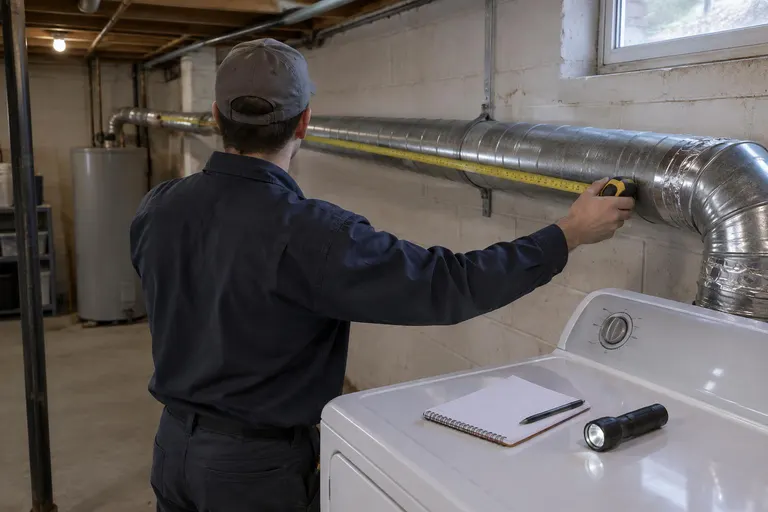
A common code planning figure is about 35 feet, reduced for each bend, but your dryer manual and local code decide. Our Vent Run Builder lets you draw your route and see the effective length.
Can I clean my dryer vent myself?
You can clean the lint screen and the trap slot often, and a short, straight vent can be cleaned with a brush kit. Long, bent, roof and hidden runs, gas dryers and vents that have not been cleaned in years are better left to us.
What dryer vent services do you offer?
We clean dryer vents, inspect and test airflow, repair and replace ducts and hoods, install and reroute vents, clean HVAC air ducts, serve apartments and businesses, and offer maintenance plans. Every service has its own page with details, steps and answers.
Want us to swap it?
We replace thin foil duct with smooth metal and seal every joint.