
The shortest path is the strongest path.
Long, winding vents struggle. Rerouting to a shorter, straighter exit gives your dryer less to push and lint fewer places to settle.
- Goal: Shorter, straighter run
- Check: Closest suitable exterior wall
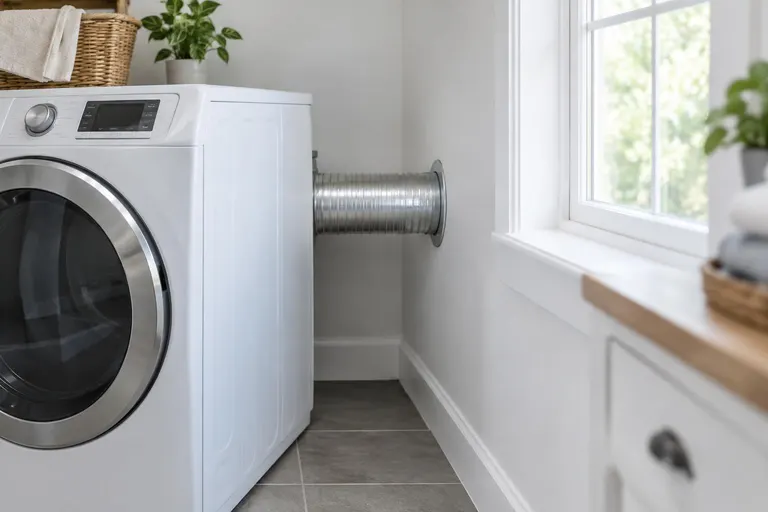
What it is, and why it matters.
Many homes have a vent that travels through a basement, an attic or a series of walls when a much shorter route exists. Every foot of duct and every elbow adds resistance.
We look for a shorter exit, often directly through the nearest exterior wall, and build it with smooth metal duct. If a shorter route is not possible, we explain the limits and what other options exist.
Four things done right.
A fresh look at the route
We question the existing path instead of copying it.
Fewer bends
Straighter runs move air with less effort.
Clear about limits
If a shorter route is not possible, we say so.
Measured results
Airflow checks show the improvement.
From first call to shorter dryer vent rerouting.
- 1
Review the old route
We map what you have and where it goes.
- 2
Find a shorter exit
We look for the nearest suitable wall.
- 3
Build the new run
Metal duct, a new hood and sealed joints.
- 4
Test and compare
We compare airflow before and after.
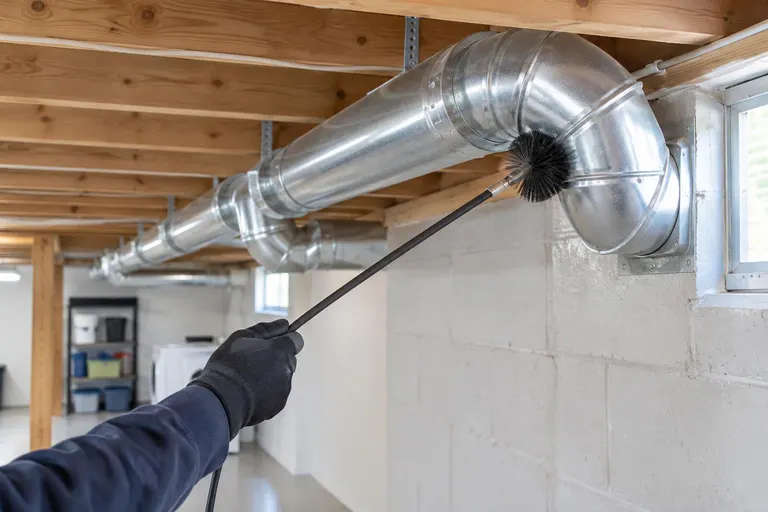
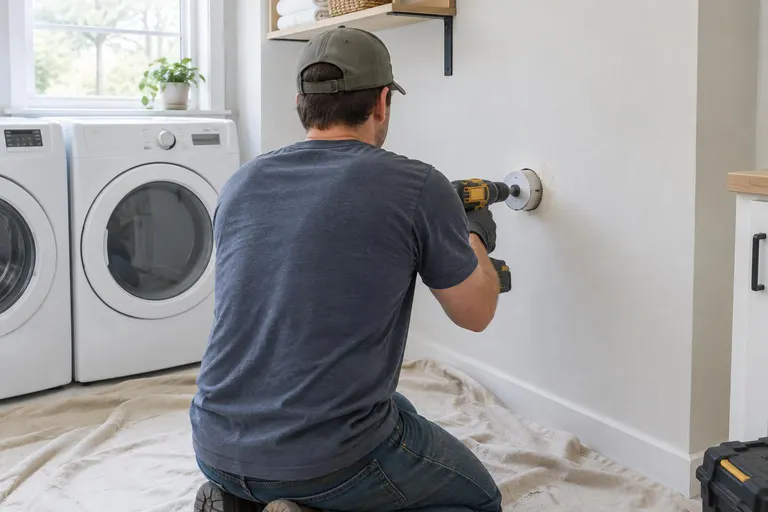
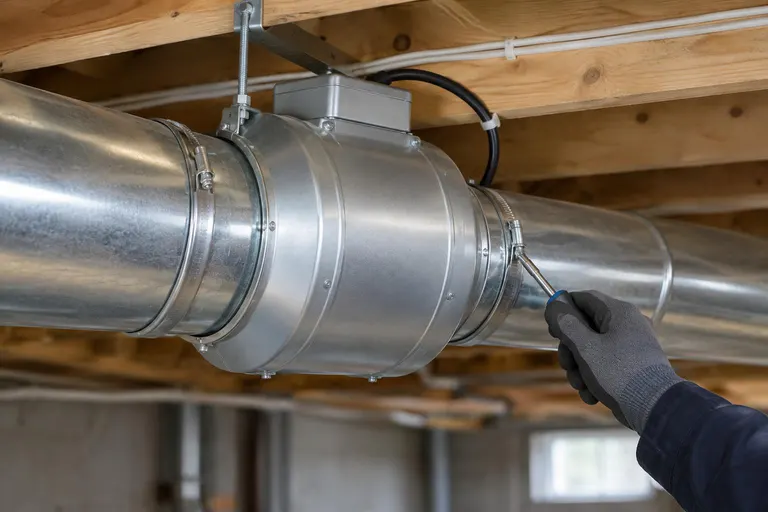
Shorter Dryer Vent Rerouting in cities across the country.
We do this work for homes and businesses from coast to coast. Find your city to see the climate and homes we plan for.
Shorter Dryer Vent Rerouting: common questions
Is a shorter vent always better?
For airflow, yes, as long as it exits in a suitable place and meets code. We confirm before we cut.
Can I reroute a vent myself?
It involves cutting walls and sealing the exterior, so most people ask a pro.
How do I get a quote for shorter dryer vent rerouting?
Fill in the form or call or text 800-313-8481. A few details about the dryer and the vent, or a photo of the vent hood, usually give us what we need, and we send a written price.
Ready to talk about shorter dryer vent rerouting?
A few details or a photo of the vent, and a written price.